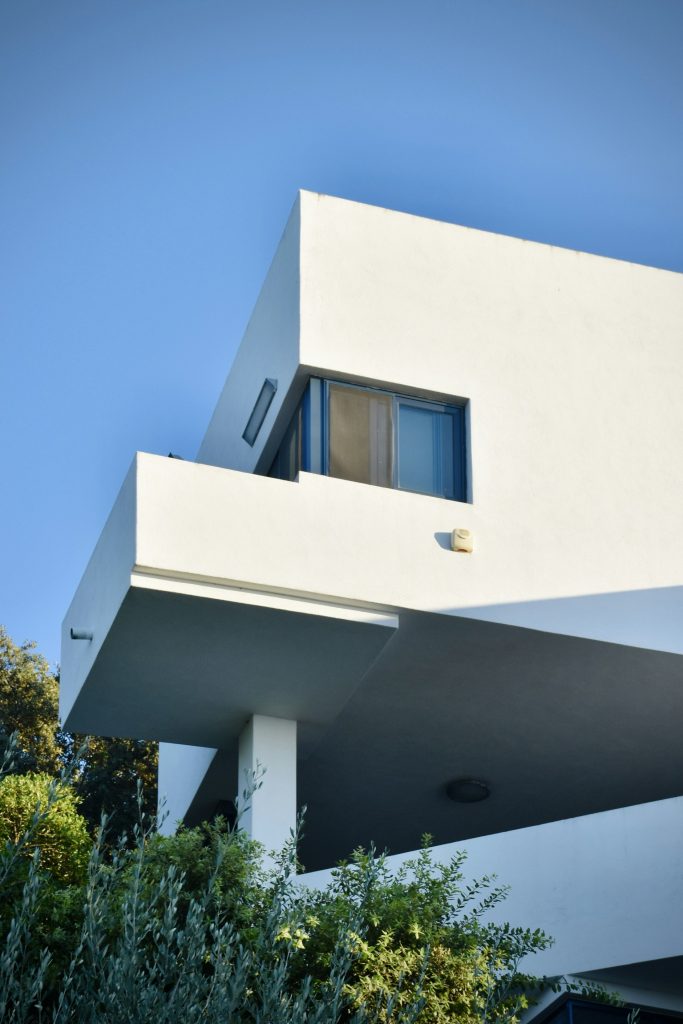
Near Verona, a 17th-century villa that keeps its peace at night.

La Villa La Zambonina près de Vérone

Near Verona, a 17th-century villa that keeps its peace at night.

Frescoes, antique furniture, an authentic farm courtyard, and up to twenty guests sleeping under its roof. To keep the estate quiet at night, Villa La Zambonina entrusted its entrance to a Nice barrier.

Photo: © Nice

The place: a Palladian villa turned guesthouse

In Vigasio, near Verona, Italy, Villa La Zambonina is a 17th-century Palladian villa at the heart of a farming estate. Around it: pathways, trees, waterways, and traditional rice and cereal fields. Inside: frescoes, paintings and period furniture.

Today the villa has become a guesthouse that can welcome up to twenty people.

The concept: an entrance that knows who may pass

The owners wanted to regulate access to the private part of the estate at night, so that only permanent residents and tenant farmers could enter.

With Z.M. Zoccatelli impianti, a Nice partner, they installed an M5BAR barrier. Indicator lights were added to the boom so it stays visible in autumn and winter, when fog is frequent in the area.
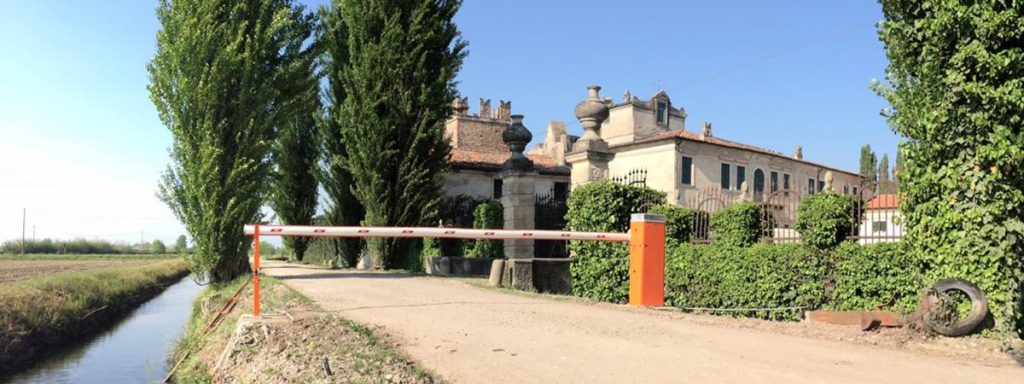
The Nice barrier at the estate entrance
© Nice

What it changes

The estate stays peaceful at night. The private area is open only to those who live and work there.

Guests sleep soundly. A guesthouse is first and foremost a promise of calm.

The barrier can be seen, even in the mist. The lights added to the boom keep it visible in any weather.

The heritage is respected. A simple barrier is enough: no imposing gate, no wall changing the landscape.
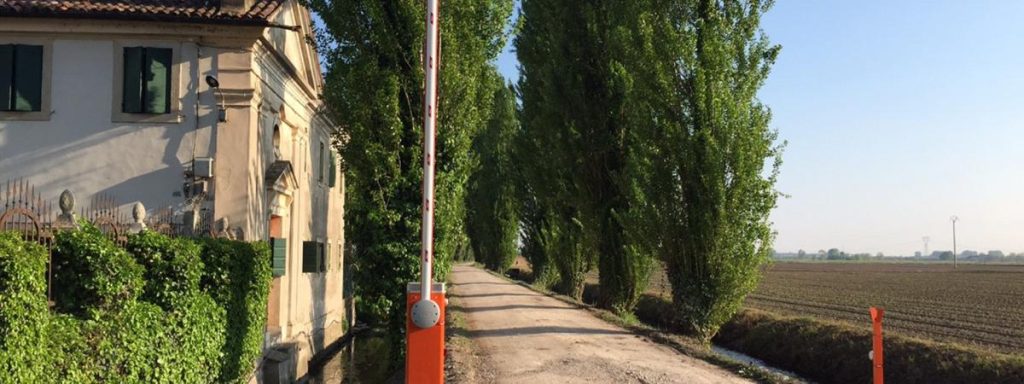
The Villa La Zambonina estate
© Nice

Access in your pocket

For residents and farmers, the entrance fits in a remote: the barrier lifts for them, and for them alone.

The line that sums it up

A beautiful guesthouse is also an entrance that keeps watch while everyone sleeps.

AND HERE AT HOME?

From St. Kitts to Antigua, from Anguilla to Barbados:

  1. Guesthouses and cottages. Calm is what travellers come for: a controlled entrance protects it.
  2. Estates and plantation houses. Our old estates welcome visitors by day and residents by night.
  3. Rental villas. You know who comes in, and at night access stays reserved for the occupants.
  4. Private roads. A discreet barrier is often enough, without spoiling the landscape.

Night falls over the estate. The last car passes, the barrier lowers, its small lights glowing in the dark. In the villa, the guests switch off the lamps. Outside, there is only silence and the sound of water.

A guesthouse, villa or residence project? Write to us: mail@nice-carib.com.

In Bucharest, a bar whose walls open onto the street.

The Drunken Lords à Bucarest, baies vitrées ouvertes

In Bucharest, a bar whose walls open onto the street.

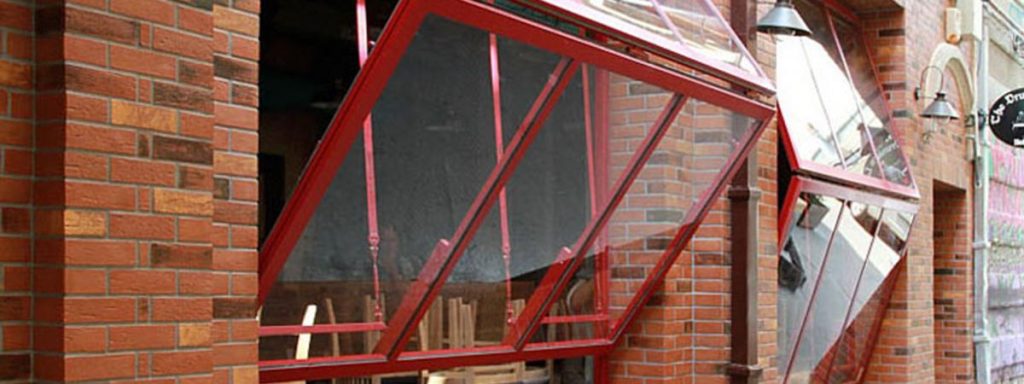
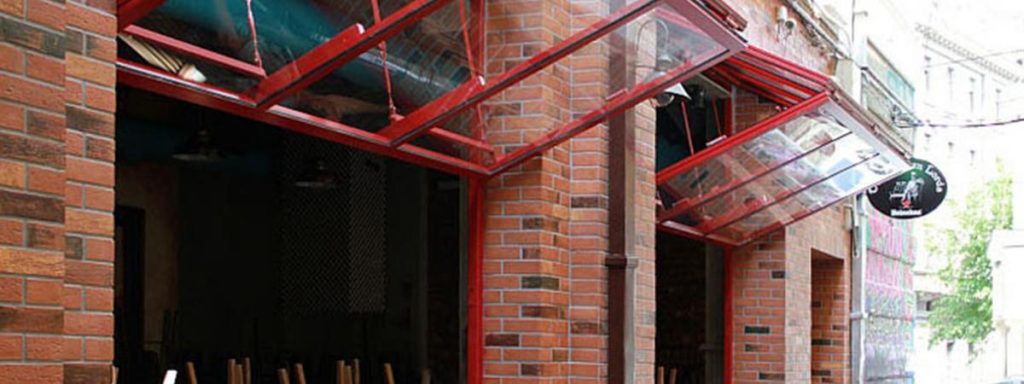
On weekends the room was packed, and in summer there was not enough air. So the bar opened its walls: large glass panels that swing open with one gesture and turn the room into a terrace.

Photo: © Nice

The place: The Drunken Lords, in the old town

In the heart of Bucharest’s historic centre, in Romania, The Drunken Lords is one of the city’s most popular nightlife spots. Success had a downside: on weekends the crowds exceeded the room’s capacity, and in summer, ventilation became a real issue.

The concept: walls that become doors

The solution lies in the large external window walls. They open horizontally on hinges, creating a wide passage between the interior, the terrace and the street.

To move them, Nice installed an NDSM0006 industrial gearmotor, able to handle up to 300 kg, run by a UST2 control unit. And according to Nice, it was all done without any building work.

Les grandes baies vitrées pivotantes
© Nice

What it changes for the bar

The room grows when it needs to. On busy nights, inside and terrace become one.

Air flows. Open walls let the evening cool in, and the room breathes.

The bar opens onto the city. From the street you see the atmosphere, hear the music, and want to walk in.

No building site. The transformation happened without construction work.

La salle ouverte sur la rue
© Nice

The mood at your fingertips

One touch on the control, and the large panels swing open. Later in the evening or when rain threatens, another touch, and the room closes again.

The line that sums it up

A bar that opens its walls is a room that is never too small.

AND HERE AT HOME?

From Antigua to St. Kitts, from Barbados to Sint Maarten:

  1. Beach bars and restaurants. Open to the sea when the weather is fine, sheltered when a shower passes.
  2. Busy nights. Carnival, parties, high season: the room spills onto the terrace.
  3. The evening air. Open walls let the breeze in, and the room stays pleasant.
  4. Hotels and their lounges. A lobby or bar that opens onto the garden changes the whole experience.
Piscine à débordement face à une mer turquoise
Rosemary Media / Unsplash

A restaurant, hotel or residence project? Write to us: [mail@nice-carib.com](mailto:mail@nice-carib.com).

Saturday night. The sun slips behind the rooftops, the large panels swing slowly open. The music spills onto the terrace, the breeze drifts into the room. Tonight, the bar has no walls.

In Bonn, a five-star hotel where 514 blinds lower without a sound.

Le Kameha Grand Bonn

In Bonn, a five-star hotel where 514 blinds lower without a sound.

Floor-to-ceiling windows, a spectacular design, and guests who set the light in their own room. At the Kameha Grand Bonn, 514 motors bring the blinds down in complete silence.

Photo: © BonnVisio / Nice

The place: the Kameha Grand, on the banks of the Rhine

In Bonn, Germany, the Kameha Grand is a five-star hotel designed by architect Karl Heinz Sommer. Its architecture catches the eye, and its energy concept aims at “green building” standards: passive solar gain, intelligent cooling systems and geothermal energy.

The concept: light on demand, without a sound

The hotel’s floor-length windows, including those overlooking the event hall, are fitted with motorised aluminium blinds. The blinds come from ABBA Protezioni Solari and are driven by elero motors, Nice’s German brand for solar shading.

In total, 514 JA drives. They are fitted with silent “Soft” brakes and run particularly quietly.

Baies vitrées et stores du Kameha Grand
© BonnVisio / Nice

What it changes for the hotel

Guests choose their light. With a wall-mounted transmitter or a handheld remote, everyone sets the blinds to their liking.

Silence is part of the service. In a five-star hotel, a squeaking blind has no place. Here, you do not hear them.

The sun works with the hotel. The blinds complete a building designed to make use of the sun and keep cool.

Large spaces stay under control. Even the event hall sets its light, for a conference in the morning and a dinner in the evening.

Intérieur du Kameha Grand Bonn
© BonnVisio / Nice

The room at your fingertips

One touch on the transmitter, and the room goes from full light to soft shade. Guests have nothing to learn: they press, the blind obeys.

Hall d'hôtel moderne
Neon Wang / Unsplash

The line that sums it up

In a grand hotel, luxury is also light that changes without a sound.

AND HERE AT HOME?

From Anguilla to Barbados, from Antigua to Sint Maarten:

  1. Upscale hotels. Guests expect to choose their light with one gesture, and in silence.
  2. Sea-view windows. Large glazed surfaces, and a sun that shines all year.
  3. The afternoon nap. A room that dims with one gesture, without waking anyone.
  4. Function rooms. Weddings, seminars, dinners: the light adapts to every moment.
Piscine d'hôtel entourée d'arbres
Aparna Johri / Unsplash

A hotel, residence or real-estate project? Write to us: [mail@nice-carib.com](mailto:mail@nice-carib.com).

End of the day. The guest comes back from the beach and presses a button: the blinds glide down without a sound, and the room turns soft and cool. Outside, the sun keeps shining. Inside, it is already time to rest.

In Katowice, the developer handed over apartments that were already connected.

L'ensemble résidentiel Pierwsza Dzielnica à Katowice

In Katowice, the developer handed over apartments that were already connected.

On handover day, the new residents found more than a brand-new apartment: lights and heating already answered to their phone, and a sensor was watching for water leaks. In Poland, a developer made the smart home standard equipment.

Photo: © Nice

The place: Pierwsza Dzielnica, in the heart of Katowice

Pierwsza Dzielnica is a new residential complex in central Katowice, Poland, close to the city’s main cultural and sports venues. The developer, TDJ Estate, chose to fit it with the FIBARO smart home, the range that is now part of the Nice world. In the Caribbean it is also known as Yubii: Yubii is Fibaro.

The concept: a connected pack from day one

Every home is handed over with a starter package supplied by the developer:

– modules to control electrical appliances remotely; – thermostatic valves and temperature sensors to regulate heating room by room; – a flood sensor.

From a smartphone app, residents control lighting and heating, and receive an immediate alert if water leaks.

Les immeubles de Pierwsza Dzielnica
© Nice

What it changes

For the buyer, a home that is already alive. There is nothing to install: the day they move in, the apartment answers to their phone.

For the developer, a concrete selling point. In a neighbourhood where developments look alike, this one stands out for what you can do, not just for what you see.

A system that grows with its residents. Residents can later add more devices, such as smart sockets or shutter control. The system is modular: it expands without building work.

Un appartement connecté de Pierwsza Dzielnica
© Nice

The apartment in your pocket

Lights, temperature, leak alerts: everything goes through the phone. At the office, travelling or on the sofa, residents keep an eye on home.

Intérieur d'un appartement
© Nice

The line that sums it up

Handing over an apartment that is already connected means handing over keys that open far more than a door.

AND HERE AT HOME?

From Sint Maarten to Anguilla, from Antigua to Barbados:

  1. Air conditioning instead of heating. Here, it is the AC we control: Nice’s Clima-Control thermostat is designed for wall-mounted air conditioners.
  2. Owners who live elsewhere. A leak alert on the phone, even thousands of miles away.
  3. Rental investors. A home you can control remotely is easier to manage between tenants.
  4. New developments. A connected pack as standard is one more reason to choose this development over another.
Vue de l'ensemble résidentiel
© Nice

A real-estate, residence or hotel project? Write to us: [mail@nice-carib.com](mailto:mail@nice-carib.com).

First evening in the apartment. The boxes are still taped shut, but the lights come on with a tap on the phone. The new residents smile: they have only just arrived, and the home already knows them.

In Milan, 3,000 motors shade an entire office tower.

La tour Libeskind à CityLife, Milan

In Milan, 3,000 motors shade an entire office tower.

Twenty-eight floors, three thousand people at work, and a facade that manages its own shade. In Milan’s CityLife district, the tower designed by Daniel Libeskind protects its offices from the sun with about 3,000 Nice motors.

Photo: © Stefano Siboni / Nice

The place: “il Curvo”, in CityLife

In Milan, the CityLife district is organised around Piazza Tre Torri, one of Europe’s largest pedestrian areas. Among its three towers, the one designed by Studio Libeskind houses PwC’s Milan headquarters: about 3,000 professionals across 28 floors.

During design it was nicknamed “il Curvo”, the curve. Its vertical, prism-like form traces part of a sphere that wraps around the square. And it was built with sustainability in mind, with systems designed to reduce energy and water use while keeping the people inside comfortable.

The concept: a facade that manages its own shade

Nice’s R&D team and architect Daniel Libeskind’s studio selected Nice products together for an inclined shading system fitted to the facade’s trapezoidal modules.

About 3,000 Era S tubular motors were installed. They were chosen for their quiet operation. And the system can be connected to climate sensors to lower energy consumption.

Façade de la tour et son ombrage incliné
© Stefano Siboni / Nice

What it changes for the building

Shade arrives at the right time. Linked to climate sensors, the blinds follow the sun, and the heat stays outside.

Less energy for cooling. Less sun heating the glass means less work for the air conditioning.

Silence in the offices. Three thousand motors, and nobody hears them: that is why they were chosen.

A facade that stays beautiful. The shading follows the architecture instead of hiding it.

Détail des modules de façade
© Stefano Siboni / Nice

The building that runs itself

In a tower this size, no one goes from office to office to lower the blinds. The system takes care of it throughout the day, according to the weather.

Intérieur de la tour
© Stefano Siboni / Nice

The line that sums it up

A facade that makes its own shade is a building that stays cool without a second thought.

AND HERE AT HOME?

From Barbados to Antigua, from Sint Maarten to St. Kitts:

  1. Sun all year round. Exposed facades heat up every day: shade that adjusts itself works there without a break.
  2. Office air conditioning. Less heat coming in means less effort for the AC.
  3. Public buildings and headquarters. Large glazed surfaces, and nobody to manage each blind by hand.
  4. Our islands’ architects. Shading that follows the facade is one more freedom to design.
Immeuble avec balcons
Simone Hutsch / Unsplash

A building, hotel or real-estate project? Write to us: [mail@nice-carib.com](mailto:mail@nice-carib.com).

It is 3 pm. On the curved facade, the blinds tilt gently, one floor after another. Inside, the light stays soft, the air stays cool, and nobody has looked up from their screen.

In Auckland, a terrace that opens to the sky and closes to the rain.

Toit à lames orientables au-dessus d'une terrasse à Auckland

In Auckland, a terrace that opens to the sky and closes to the rain.

Above the terrace, large slats turn one by one. They let the sky in, hold back the heat, soften the glare, and close completely when the shower arrives.

Photo: © Nice

The place: a family home in Auckland

In Auckland, New Zealand, a family wanted to enjoy its terrace in any weather. Above it sits a roof unlike any other: a “convertible” roof made of large slats in glass, aluminium or stainless steel.

The concept: a roof that follows the weather

Each slat is adjusted individually to the weather. In bright sun, the slats block the heat and reduce glare while keeping the sky in view. In the rain, the roof closes completely.

To move these large slats, the project uses the Picolo O linear drive from elero, the Nice group’s German brand specialised in solar shading. According to the project page, these intelligent linear drives make the large slats easy to control and create ideal lighting conditions.

Lames du toit convertible vues de la terrasse
© Nice

What it changes

The terrace becomes a room in its own right. It is no longer just for fine days: you lunch in the sun and stay on when the sky clouds over.

Light, exactly as you want it. Open sky, filtered light or soft shade: every slat finds its angle.

The heat stays outside. The slats block the sun’s heat without shutting out the view.

Rain no longer sends anyone indoors. The roof closes, and the evening carries on.

Piscine à débordement face à une mer turquoise
Rosemary Media / Unsplash

The terrace at your fingertips

One gesture is enough to change the mood: open to the sky, filter the light, close everything. The roof adapts, and those beneath it simply enjoy.

Maison moderne sur une côte rocheuse
Rosemary Media / Unsplash

The line that sums it up

A roof that follows the sky is a terrace you never need to leave.

AND HERE AT HOME?

From Antigua to Barbados, from Sint Maarten to Anguilla:

  1. The midday sun. The slats hold back the heat, so you can stay outside at the brightest hours.
  2. Sudden showers. They pass quickly, but they do pass: the roof closes until they are gone.
  3. Rental villas. A terrace that lives in any weather is something guests notice.
  4. Restaurants and hotels. Covered when it rains, open when it shines: a terrace that stays full.
Piscine entourée de palmiers

A villa, hotel or restaurant project? Write to us: [mail@nice-carib.com](mailto:mail@nice-carib.com).

Late afternoon. The slats open slowly, the sky appears, pink then orange. On the terrace, everyone stays a little longer. There is no reason to go in.

In Dubai, a brand-new island and 40 barriers keeping watch over its car parks.

Vue aérienne d'une plage de Dubaï et de la grande roue

In Dubai, a brand-new island and 40 barriers keeping watch over its car parks.

Facing Dubai Marina, an artificial island is home to residences, shops and more than 200 places to stay and play. Beneath its elevated gardens lie underground car parks, and some forty Nice barriers manage who comes in.

Photo: Unsplash (use the photographer name shown on the page)

The place: Bluewaters, the island facing the marina

Bluewaters Island is an artificial island set right in front of Dubai Marina, near Jumeirah Beach. Meraas Group designed it as a new neighbourhood: residences, retail space, more than 200 accommodation and entertainment venues, and elevated panoramic gardens. At its heart stands Ain Dubai, a Ferris wheel more than 250 metres tall.

You reach it by car over a bridge, on foot over a walkway, or by monorail. And the cars head down into spacious underground car parks.

The concept: smooth access, even when everyone arrives at once

To manage those car parks, Meraas chose Nice. About 40 M3BAR barriers from the NiceBar range were installed, with access-control systems tailored to the site.

NiceBar is designed for road access control: car parks, private driveways, condominium entrances, including high-traffic sites. Nice highlights its long-lasting reliability, its simple and elegant design, and carefully chosen materials.

Barrière NiceBar à l'entrée d'un parking
© Nice

What it changes

Residents get home without waiting. The barrier becomes part of the scenery: it rises for those entitled to enter and guards the car park the rest of the time.

Visitors are welcomed, not blocked. Hotels, restaurants, shops: on an island where everyone comes to stroll, access is organised from the car park entrance.

Equipment that keeps up. On a busy site, reliability matters as much as elegance. That is exactly what Nice claims for NiceBar.

Immeuble avec balcons
Simone Hutsch / Unsplash

Access in your pocket

For residents, getting into the car park takes a single gesture: a badge, a remote, and the barrier lifts. For the manager, it is a car park that organises itself, day and night.

Téléphone en main
Mika Baumeister / Unsplash

The line that sums it up

On an island made for wandering, arrival begins with a barrier that rises at just the right moment.

AND HERE AT HOME?

From Sint Maarten to Antigua, from Anguilla to St. Kitts:

  1. Condominium residences. A shared car park stays reserved for residents, with no attendant at the gate.
  2. Hotels and marinas. Guests, deliveries, yachtsmen: everyone enters exactly where they should.
  3. Shopping centres and restaurants. Organised parking, even on the busiest evenings.
  4. Real-estate developments. A well-designed entrance is the first thing a future buyer sees.
Façade éclairée le soir
Mustafa Yiğit / Unsplash

A hotel, residence or real-estate project? Write to us: [mail@nice-carib.com](mailto:mail@nice-carib.com).

Evening falls over the marina. Cars glide beneath the gardens, the barrier rises, lowers, rises again. Up above, the great wheel lights up, and the whole island begins its night.

In Singapore, 2,560 rooms draw their curtains against the sun.

Le Marina Bay Sands à Singapour, la nuit

In Singapore, 2,560 rooms draw their curtains against the sun.

Under the equatorial sun, three fifty-five-storey towers face the bay. In every room, with a touch on a wall button, the curtains glide across and keep the heat outside.

Photo: Rosemary Media / Unsplash

The place and the project

Singapore, by the docks. The Marina Bay Sands, designed by architect Moshe Safdie, is presented as the largest and most impressive resort in Asia: three 55-storey towers, 2,560 luxury rooms, and at the very top, resting on the towers like a ship, the Sands Sky Park, with its tropical gardens, its observatory and the world’s largest infinity pool, about 200 metres above the ground.

Under a sun as generous as ours, the hotel had a simple challenge: shield its rooms from light and heat without losing any of its elegance. It chose Nice.

The concept: a curtain at your fingertips

In the rooms, Nice motorized the curtains, on a double track, and the roller blinds in other areas. Nice Mindy motors are concealed inside each track, out of sight.

To control them, more than 1,200 wall-mounted modules, on square aluminium plates in a colour chosen to match the rooms. And thanks to their self-learning feature, the NiceWay transmitters were set up quickly and simply, on a project of this size.

Illuminated hotel facade
Mustafa Yigit / Unsplash

What it changes for the hotel

Rooms shielded from the sun. One touch, and the curtains close on the midday heat. According to the US Department of Energy, quoted by Nice, solar shading can reduce heat gain from the sun by up to 65% on a south-facing facade and up to 77% on a west-facing one. Less heat coming in means less cooling to supply.

Comfort the guest controls. Sheer or blackout, soft light or total darkness for a nap: everyone sets their room the way they like it, without hunting for a cord.

Technology that blends into the decor. Hidden motors, matching wall plates: nothing spoils the room’s design.

A project kept under control. More than 1,200 control points, installed and set up simply.

Modern hotel reception
Neon Wang / Unsplash

The hotel in your pocket

Today, Nice’s Yubii world, which brings Nice and FIBARO together, goes further: curtains and blinds become part of scenes. Close on the sunny side at noon, open gently at wake-up time, the whole floor in “night” mode with one touch. And for the most ambitious properties, ELAN, Nice’s premium system, controls a whole home, and even a whole building.

Tablet by a swimming pool
Maarten van den Heuvel / Unsplash

The line that sums it up

2,560 rooms under the equatorial sun, and each one keeps its cool with a single touch.

AND HERE AT HOME?

From Barbados to Anguilla, from Antigua to the British Virgin Islands:

  1. The same sun. As in Singapore, our hotels live under intense light all year round. Controlled curtains keep rooms cool.
  2. Air conditioning, the number one cost. Every degree gained from shade is energy saved.
  3. Sea-view rooms. Large windows are a luxury: motorized curtains let guests enjoy them without suffering the heat.
  4. Guests’ naps. After a long flight, they want darkness at a touch, not a cord to look for.
Hotel pool surrounded by trees
Aparna Johri / Unsplash

A hotel, residence or real-estate project? Write to us: [mail@nice-carib.com](mailto:mail@nice-carib.com).

Noon over the bay. Outside, the light flattens the quays. In the room, the curtains have glided across without a sound, the room is bathed in soft light, the air is cool. The guest lies down, and the sun is nothing more than a show behind the veil.

Source: niceforyou.com, “Marina Bay Sands Hotel”.

Eighteen rooms, and the residence runs from a single phone.

Piscine illuminée entourée de palmiers

Eighteen rooms, and the residence runs from a single phone.

Today’s arrivals have received their codes, the AC in empty rooms has gone to rest, the blinds are holding in the cool, the gate closes behind the last taxi. The manager saw it all, from a single screen.

Photo: Ahmet Yüksek / Unsplash

Picture it: an eighteen-room tourist residence

Not a big hotel, not just a villa. A residence on a human scale, with its reception, its pool, its rooms filling and emptying with the seasons. And a small team that has to do it all: welcome, maintain, keep watch, lock up.

This is exactly the kind of property where every automated task frees up time, and every kilowatt-hour saved shows at the end of the month.

The concept: everything the series has shown, together

Energy. Nice’s Clima-Control thermostat runs wall-mounted split air conditioners, and the BiDi-Multi Sensor detects presence to trigger scenes that, according to Nice, reduce consumption. Blinds and shutters keep the cool in, and smart plugs show what each appliance uses.

Access. Tedee locks send one code per stay, valid from check-in to check-out, and the Tedee portal brings every lock together in one place. Staff get access limited to their working hours.

Peace of mind. Hikvision cameras with AcuSense technology tell people and vehicles apart from everything else, and only alert when it matters. Leak sensors warn you as soon as there is water in the wrong place.

Orchestration. Nice’s Yubii world, which brings Nice and FIBARO together, ties it all into scenes: “Arrival”, “Departure”, “Night”, “Off-season”.

Modern hotel reception
Neon Wang / Unsplash

What it changes for the manager

Arrivals with no waiting. The guest receives the code before leaving home, comes in whenever the flight lands, and finds a room that is already cool.

A bill that follows occupancy. Empty rooms are no longer cooled for nobody.

A team freed up. No more evening round to switch off, close and lock: a “Night” scene does it.

A residence managed remotely. The owner can hand access management to a manager and still stay in control. The installer can work remotely on the Yubii Home Pro gateway.

Residence with pool in a tropical garden
Vero Benedini / Pexels

The residence in your pocket

Yubii Home for energy and scenes, Tedee for access, Hik-Connect for the cameras: the whole residence fits in one phone. Whether the manager is at reception, in town or traveling, they see everything and act with a tap.

Tablet by a swimming pool
Maarten van den Heuvel / Unsplash

The line that sums it up

Eighteen rooms, one phone, and a team that finally has time for its guests.

AND HERE AT HOME?

From Sint Maarten to St. Lucia, from Anguilla to Antigua:

  1. Tourist residences. They keep our islands alive, often with small teams. Every automated task counts.
  2. Air conditioning, the number one cost. Controlling it room by room is the most visible saving.
  3. High and low season. An “Off-season” scene puts the residence on standby with one tap.
  4. Guests from all over the world. A code received in advance, a room that is ready: the welcome begins before arrival.
Residence and pool at dusk
Ahmet Cotur / Pexels

A residence, hotel or real-estate project? Write to us: [mail@nice-carib.com](mailto:mail@nice-carib.com).

Night falls over the residence. The occupied rooms are cool, the others are asleep, the pool glows beneath the palms. At reception, the manager turns off the screen: everything is in order. Tomorrow, new guests will arrive, and the residence will be ready before them.

Sources: niceforyou.com, tedee.com, hikvision.com

The developer who hands over homes that are already smart.

Résidence contemporaine dans la verdure

The developer who hands over homes that are already smart.

On viewing day, the buyer opens the door with a code sent to their phone. In the show apartment, the shutters open at a word and the lights follow their steps. Before even signing, they are already living in a smart home.

Photo: Arno Senoner / Unsplash

Picture it: a new development of thirty homes

A plot, a permit, architect’s plans. On paper, every development looks the same: same floor area, same view, same price per square foot. For a developer, the question is simple: what will make the difference on launch day?

More and more, the answer fits in the buyer’s phone.

The concept: deliver the intelligence with the walls

An expectation becoming the norm. For Tedee, the smart home is no longer just a desired upgrade: it is becoming an expected feature in any new home. Buyers, especially younger ones, want to control their doors, lighting and climate from their phone. And the front door is the first thing they see.

An installation that does not hold up the site. Nice’s Yubii world, which brings Nice and FIBARO together, is wireless. Nice describes it as modular and scalable: you can start with one room and add the rest later, with no masonry work. Smart locks can be added at any stage of construction, whereas wired systems are hard to fit late.

Architects who have already chosen it. In Madrid, Nice and its partners equipped a six-home building, presented as the first step of a long-term project. Near Verona, the firm Studio Federico Cappellina & partners chose Nice to make two contemporary villas smart.

Modern house on a rocky coastline
Rosemary Media / Unsplash

What it changes for the developer

Viewings without keys. Tedee suggests it: instead of a key, the agent or developer sends a code valid only for the length of the viewing. Buyers can even view on their own, at their own time.

A better-organized site. Tradespeople, interior designers and furniture deliveries get keyless access through the keypad, without installing an app. And the log shows who entered which home, and when.

A concrete selling point. Lighting, air conditioning, shutters, access: the buyer discovers a home they already control from their phone. For high-end residences, ELAN, Nice’s premium system, extends to the private cinema and music throughout the house.

Service after handover. With the Yubii Home Pro gateway, the owner can give their installer remote access to check the system and fix small issues at a distance.

Phone in hand
Mika Baumeister / Unsplash

The development in your pocket

During construction, the developer follows access from their phone. After handover, each buyer finds their home in the Yubii Home app: lighting, climate, shutters, access, from the living room or from the other side of the world.

White contemporary building
Arno Senoner / Unsplash

The line that sums it up

Handing over a smart home means selling a promise the buyer can touch on viewing day.

AND HERE AT HOME?

From Antigua to the British Virgin Islands, from Anguilla to St. Lucia:

  1. Buyers far away. Many buy from Europe or North America: a home they can control remotely reassures them from day one.
  2. Rental residences. An investor who rents out wants to manage access and air conditioning without being on site.
  3. Remote site management. Tradespeople and delivery crews come in with a code, with no keys changing hands.
  4. High-end developments. In a demanding market, the smart home is a selling point you can see, and live.
Infinity pool overlooking a turquoise sea
Rosemary Media / Unsplash

A real-estate development, residence or hotel project? Write to us: [mail@nice-carib.com](mailto:mail@nice-carib.com).

Handover day. The new owner receives a code, pushes the door, says a word: the shutters open onto the sea, and light floods in. Not a single box unpacked yet, and the house already obeys.

Sources: tedee.com, niceforyou.com