Your villa is worth more than you think. Home automation proves it.

We often talk about home automation in terms of comfort. Security. Energy savings.

We rarely talk about what it does to the value of your property.

Yet it’s one of the strongest — and least used — arguments for a property owner in the Caribbean.

Today’s buyer is no longer the same

Ten years ago, a villa buyer in Saint-Martin, Saint-Barth or Guadeloupe was looking for a view, a pool, square footage.

Today, that same buyer arrives with international references. They’ve stayed in hotels where the shutters close automatically at sunset. They’ve rented villas where access is keyless. They may live in a connected home in Europe or the United States.

When they tour your property, they no longer just see square meters. They’re evaluating a lifestyle.

And a villa equipped with a complete home automation system can no longer be compared to a standard villa. It plays in a different league.

What the numbers say

Real-estate studies conducted in Europe and North America all point the same way: a home equipped with home automation sells on average 5% to 15% higher than a comparable unequipped property — and sells faster.

In the Caribbean’s high-end segment, where buyers are often international and discerning, the gap can be even wider. That’s not a sales pitch. It’s a market reality that specialized real-estate agents are seeing more and more.

A Nice motorized gate. Automated shutters. An integrated security system. A Tedee smart lock. These are features that can be seen, felt, and priced into the transaction.

Home automation as a negotiating argument

In a real-estate sale, anything that removes the buyer’s objections strengthens your negotiating position.

A buyer touring an automated villa doesn’t have to imagine future integration work. They don’t have to wonder how to manage the property remotely from Paris or New York. They don’t have to plan for the cost of an installation after purchase.

It’s already done. It’s already there. And it works.

That peace of mind has a value — and serious buyers recognize it immediately.

What about vacation rentals?

If your villa generates rental income, the equation is even more direct.

Premium rental platforms — and agencies specializing in luxury villas — now list home automation features as ranking and pricing criteria. A connected villa justifies a higher nightly rate. It earns better reviews. It builds loyalty among demanding guests who will come back.

The return on investment of a Nice Yubii installation isn’t measured only on your electricity bill. It’s also measured in your occupancy rate and your average nightly rate.

Invest now, add value later

Installing a complete home automation system is an investment. But unlike a renovated kitchen or a remodeled bathroom, this investment is visible, demonstrable and measurable by any potential buyer or tenant.

And in a Caribbean market moving upmarket — driven by an increasingly sophisticated international clientele — being equipped before everyone else means building a lead your neighbours will take years to catch up on.

The question isn’t “is it worth it?”

The question is “can I afford not to do it?”


A certified [ART]IST can propose an equipment plan tailored to your property — whether it’s a primary residence, a second home or a vacation rental.

Hurricane season: what your smart home can do before, during and after

In Saint-Martin, nobody needs to explain what a hurricane can do. We know. We’ve lived it. We’ve rebuilt.

And every year, between June and November, the same question comes back: is my home really ready?

Are the shutters properly closed? The gates locked? The electrical systems protected? Have I thought of everything — from an airport 3,000 kilometres away, with a phone and an unstable connection?

Home automation doesn’t perform miracles. It can’t withstand 300 km/h winds. But it does something just as precious: it gives you control when everything else spirals out of control.


Before — Prepare in a few gestures

Hurricane preparation is often a race against the clock. The alerts come in, everyone mobilizes at once, and something always gets forgotten.

With a Nice Yubii home automation system, preparation becomes a single scene. One tap on your phone — from your living room or from the other side of the Atlantic — and your home switches into protection mode:

Shutters closed and locked on every opening simultaneously. No room-by-room walkthrough. Everything closes with a single command.

Gate and access points secured automatically. No more risk of a poorly closed gate flying off in the wind.

Outdoor lighting switched off to avoid overloading a fragile power grid.

Alerts configured so you’re notified in real time of any change in your home’s status — a detected opening, a triggered sensor.

What used to take an hour of manual checks becomes a 30-second action.


During — Monitor from anywhere

This is often when the anxiety is at its worst. You’ve evacuated. You’re waiting. And you have no idea what’s happening at home.

The Hikvision cameras connected to your system give you a real-time window onto your property — as long as the connection holds. You see. You know. You don’t endure the wait in total darkness.

And if something unlocks, if an opening is detected, if a sensor triggers — you get an immediate alert on your phone.

Distance doesn’t erase worry. But it’s infinitely more bearable when you have eyes on your home.


After — Regain control quickly

The aftermath is often the hardest phase to manage logistically. Roads are cut off. Access is difficult. And sometimes you need to send someone to check on your property before you can get back yourself.

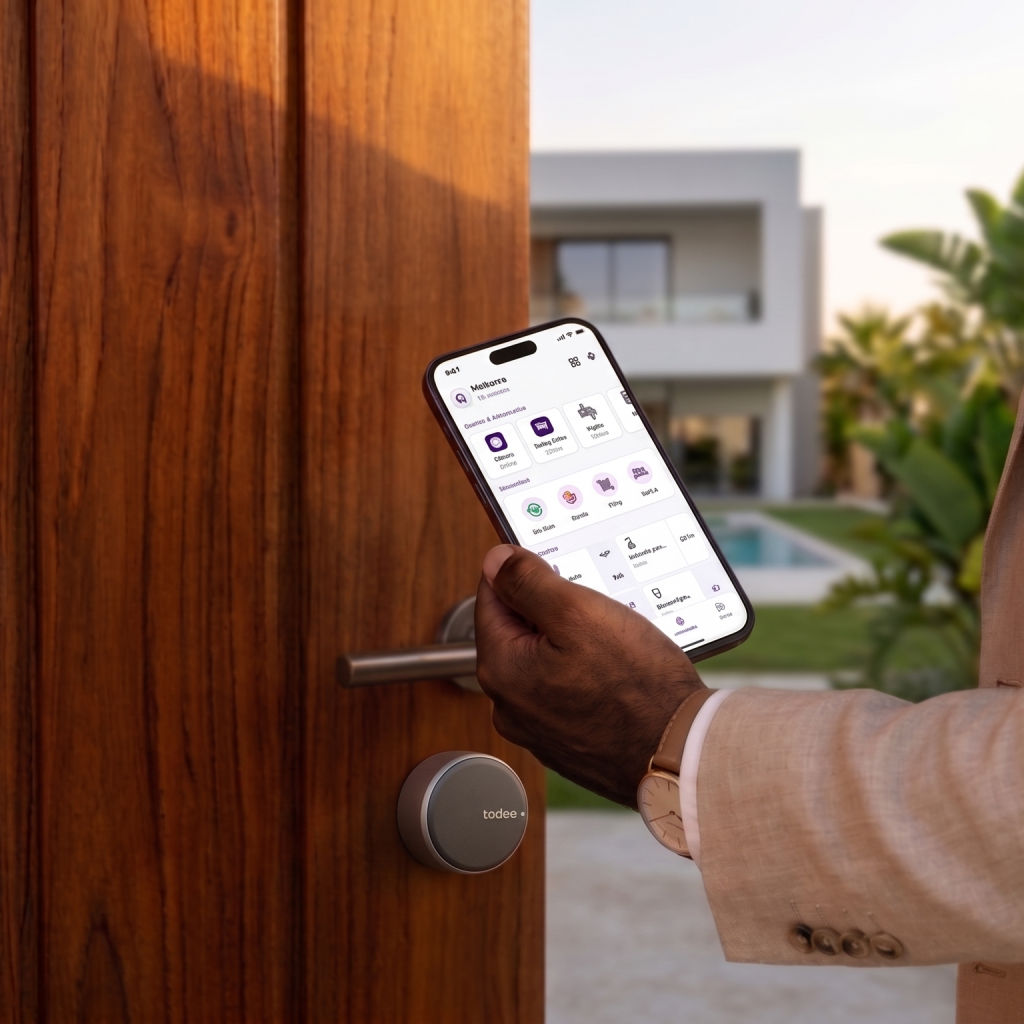
With Tedee, your smart lock lets you open your home remotely — for your property manager, a trusted friend, an emergency repair company — without handing over a physical key. You control who enters, when, and for how long.

Your property stays under your control even when you’re not there to manage it in person.


What home automation doesn’t do

Let’s be clear.

No home automation system can withstand Irma. Nice motorized shutters are robust — but against a Category 5 wind, no equipment is invulnerable.

What home automation offers you is something else: the certainty of having done everything possible. The peace of mind of knowing your home was as prepared as it could be. And the ability to monitor, act and regain control faster than anyone else.

On an island that has learned to rise again, that’s already a lot.

Prepare your home before tomorrow

Hurricane season starts June 1. The best time to install an automated protection system is now — not when the first alert drops.

A certified [ART]IST can assess your current setup and recommend the most relevant automations for your type of property.

5 things your home consumes without you knowing

You turn off the light when you leave. You switch off the TV. You think you’re being careful.

And yet your electricity bill doesn’t come down.

That’s normal. Because the real sources of waste in a home aren’t the ones you can see. They’re silent, constant, and almost impossible to track with the naked eye.

Here are the 5 main culprits — and what home automation can do about each one.

1. The air conditioning that runs for nothing

It’s the number one culprit in the Caribbean, no contest.

You leave a room. The AC stays on. You head out without remembering to turn it off. You come back two hours later to an ice-cold house nobody was in.

Multiply that by 365 days and it’s a considerable amount of money going straight down the drain.

What Yubii does: The system detects your presence and adjusts automatically. Empty room — AC dialed down. You’re home in 20 minutes — it gradually picks back up. You stop thinking about it. It doesn’t.

2. The shutters that let the heat in

A poorly managed shutter is a silent enemy of your air conditioning.

In the Caribbean, the sun hits your facades from early morning. Without shutters closed at the right times, heat seeps in and forces your AC units to compensate constantly — using more energy just to maintain a bearable temperature.

Most homeowners open their shutters in the morning and forget about them until evening. In between, their home heats up needlessly.

What Yubii does: Your shutters adapt to the sunlight and the time of day. They close when the sun bears down. They open when the breeze picks up. Your air conditioning can finally breathe.

3. The water heater that heats at the wrong times

The water heater is one of the most energy-hungry appliances in the home — and one of the least monitored.

By default, it heats continuously or on a fixed schedule that doesn’t necessarily match your actual habits. Result: it keeps water hot all day long, even when nobody is using it.

On our islands, where electricity rates are high, that’s money evaporating hour after hour.

What Yubii does: The water heater is programmed around your real usage times and off-peak tariffs. It heats when it’s useful — and only then.

4. The lighting you forget about

Not the living room lights — those get switched off.

The hallway lights. The bathroom. The garden left on all night. The terrace nobody uses after 9pm but which glows until sunrise.

Individually, each forgotten bulb seems harmless. Collectively, they add up to a constant consumption that nobody monitors.

What Yubii does: Presence detection, automatic zone-based switching, scheduling at dusk and dawn. Your home only lights up for the people who are actually there.

5. Devices on standby — the ghost on your bill

Television, internet box, plugged-in chargers, devices in standby mode — each one draws power constantly, even when off.

It’s called phantom consumption. According to studies, it can account for up to 10% of your annual electricity bill, without you ever being aware of it.

What Yubii does: Smart plugs cut power to standby devices according to your scenes. At night, everything truly switches off. Not just in appearance.

What it adds up to

Taken together, these five items represent a significant share of your actual consumption — often between 20% and 35%, depending on the home’s profile and the occupants’ habits.

In the Caribbean’s rate environment, automating these specific points can add up to several hundred euros in annual savings. On a second home left vacant for several months a year, the return on investment is even faster.

Home automation doesn’t ask you to change who you are. It adapts to you — and takes care of the rest.


A certified [ART]IST can identify your main sources of waste and install the most impactful automations for your home.

What if your home took care of your outdoor spaces too?

Automatic irrigation, connected pool, outdoor lighting: discover how Nice home automation transforms your outdoor spaces in the Caribbean.

In the Caribbean, the outdoors isn’t an accessory. It’s the heart of the home. The garden you care for, the terrace where you entertain, the pool that sets the rhythm of your weekends — all of it deserves as much attention as the indoors.
And yet, that’s often where everyday life catches up with you. The irrigation forgotten before a trip. The pool filtration set by hand. The outdoor lights switched on and off manually for years.
The Nice Yubii ecosystem changes all that. Silently, efficiently, without you ever having to think about it.

Irrigation managed by the weather — not by your schedule

Under the Caribbean sun, a poorly watered garden shows it within 48 hours. But watering too much, too often, also wastes a precious resource — and weakens your plants.
With Nice connected water valves, your irrigation system adapts in real time. It factors in the time of day, the heat, and the weather forecast. If it’s going to rain tomorrow, it doesn’t water tonight. If the heatwave drags on, it adjusts the cycles automatically.
Go on vacation with peace of mind. Your garden, for its part, isn’t going anywhere.

The pool: fewer constraints, more enjoyment

Filtration, lighting, heating, motorized cover — managing a pool is a pile of small tasks that, added together, eventually weigh you down.
Nice automation lets you program all of it around your actual habits. Filtration runs during off-peak hours. The lighting comes on at sunset when you’re entertaining. The cover closes automatically at night to maintain the temperature.
Your pool does its job. You enjoy it.

An outdoor space that adapts to your lifestyle

Night falls early in the Caribbean. And when the trade winds pick up, a terrace’s ambiance can change within minutes.
With Yubii, your outdoor space responds to your presence, to the light, to the time of day. The terrace lights come on softly for happy hour. The awnings come down when the sun is too strong. The ambiance shifts from one scene to the next, depending on the mood you’re in.
No remote controls, no back-and-forth. Everything works with you — or without you.

What really changes

Less time spent managing. Fewer oversights. Less wasted energy.
And above all: an outdoor space that becomes what it should always have been — a place of enjoyment, not of constraints.
The Nice Yubii ecosystem is compatible with more than 3,000 third-party devices, which means it integrates into your home as it is today, and grows with you tomorrow.

A certified [ART]IST can design and install your outdoor automation system.

Available on your island, trained and selected by #NiceCarib.


Architects: Why Integrating Home Automation from the Design Stage Changes Everything

A villa designed with home automation from the start is a different villa — in its experience, in its value, in what it makes possible. Here’s why the design stage is the only moment that matters.


There are two ways to integrate home automation into a residence. The first is to add it afterward — once the walls are up, the finishes in place, the equipment installed. The second is to design it from the very first pencil stroke.

These two approaches produce radically different results.


The Problem with Retrofitting

Integrating a home automation system into an existing villa is possible. Today’s technologies — wireless communications, Z-Wave and Zigbee protocols, retrofittable motors — make a lot possible. But it’s always a compromise. Conduits that can’t run where you’d want them. Control panels placed where there was room, not where they’d make the most sense. Network cables that go around instead of through.

The house bears the traces of its transformation. It’s smart in spite of itself, not by nature.


Integrated Design

When architecture and home automation are designed together, something different happens. Conduits are planned into the slabs. Power points are placed exactly where the equipment will need them. Control panels blend into the partitions as if they had always been there.

Natural light is studied according to solar orientation — and the motorized shutters are programmed to optimize that light hour by hour. Audio systems are laid out according to each room’s acoustics, not the availability of partitions. Cameras are positioned to cover critical angles without ever being visible from inside.

The result isn’t a house with technology added on. It’s a house whose technology is part of its DNA.


The Conversation Between Architect and Integrator

The historic problem between architecture and home automation is that these two worlds didn’t talk to each other early enough. The architect drew. The integrator arrived afterward. And each had to work around the other’s work.

The best projects we see today are those where this conversation happens from the design phase. Where the home automation integrator sits at the same level as the general contractor, the electrician, the plumber. Where technical decisions and aesthetic decisions inform each other.

That’s exactly what certified #NiceCarib [ART]ISTs are trained to do — not just install equipment, but take part in designing a coherent residential experience.


The Added Value for Your Clients

For an architect, offering home automation integration from the design stage means giving clients something few competitors offer: a complete vision of their future way of living. Not a catalog of gadgets, but a promise of experience.

Clients who understand what their villa will be able to do — and not do — make better decisions. They invest more wisely. And they’re more satisfied with the result.


The Caribbean Market Is Ready

Saint-Martin, Saint-Barth, Guadeloupe, Martinique — high-end residential developments are multiplying. Buyers are increasingly international, increasingly demanding, increasingly used to high comfort standards. They arrive with references — villas in Miami, apartments in London, chalets in Switzerland — and they expect to find the same level of intelligence in their Caribbean residence.

Architects who integrate this dimension from the design stage are answering a real demand. They no longer just sell a space. They sell a way of living.


And now?

#NiceCarib works with architects and general contractors across the Caribbean to integrate home automation from the design phase. Contact us for a consultation.


Automated Shutters, Awnings, and Gates — Surviving Rainy Season Without Thinking About It

The Caribbean is magnificent. It’s also unpredictable. Here’s how automation protects your villa when the weather decides otherwise.


Every Caribbean owner has lived this moment. The sky is clear in the morning. You head out to sea. At 2 p.m., a tropical squall forms in twenty minutes. And somewhere in your villa, a window was left open, an awning is deployed facing the wind, a gate stands wide open.

That’s the daily reality of the West Indian climate. Magnificent and unpredictable.

Automation doesn’t change the climate. It changes your relationship to it.


Wind as a Trigger

Modern systems integrate weather sensors — anemometers, rain sensors, UV probes. When the wind exceeds a certain threshold, the exterior awnings retract automatically before they can be damaged. When rain starts, motorized windows close. When the sun becomes too intense, the shutters tilt to let light through while blocking the heat.

Your villa breathes with its environment. It makes decisions on your behalf — decisions you would have made yourself, if you had been there.


Protection While You’re Away

A villa in the Caribbean is often a second home. It can sit empty for weeks, for months. During that time, it faces the trade winds, tropical squalls, and the humidity that seeps in everywhere, all on its own.

An automated gate with remote control lets you verify in real time that everything is closed. Open it for your gardening service from your phone. Close it again the moment they leave. Your villa is never truly left to its own devices.


Energy Savings as an Unexpected Bonus

A shutter that closes automatically when the sun beats directly on a picture window reduces indoor heat by several degrees. The air conditioning works less. The electricity bill drops.

It’s not the main argument for automation. But it’s a real, measurable benefit that owners notice from the very first months.


The Elegance of Movement

There’s something aesthetically satisfying about a shutter opening gradually at sunrise, an awning deploying at exactly the angle that optimizes shade on the terrace, a gate sliding silently as you approach.

These movements aren’t just functional. They’re the visible sign of a smart home. And they never fail to impress guests seeing them for the first time.


And now?

A certified [ART]IST can integrate weather sensors and program your automation according to the specifics of your location and exposure.

Luxury Airbnb: Why Home Automation Makes the Difference Between 4 and 5 Stars

Five-star reviews don’t happen by chance. They come from the experience you create — even before your guests set foot in the villa.


On Airbnb Luxe, competition is fierce. The villas are beautiful, the views spectacular, the pools endless. What sets apart a property that rents at full rate all year round from one that has to negotiate in the low season is rarely the number of bedrooms.

It’s the experience.


The Arrival Moment

Your guests land at Juliana at 11 p.m. Their flight was delayed. They’re tired. They’re hungry. The last thing they need is to hunt for a key box or call a property manager to get a code.

With a connected access system, they receive their personal code before departure — valid only for the duration of their stay. They arrive, they walk in, they’re home. You sleep soundly, knowing the systems handled the welcome on your behalf.

That moment, your guests mention it in their review. “The arrival was perfect.” Those are five words worth their weight in gold on a rental platform.


The House That Welcomes

A well-programmed home automation system can create what the industry calls a “welcome scene”. When the entry code is used for the first time, the house puts on a show: the lights come on gradually, the air conditioning is at the right temperature, a soft playlist plays in the living room.

No cold welcome note. No ten-page instruction manual. An experience that immediately tells your guests they made the right choice.


Security for You, Freedom for Them

Managing a rental villa remotely is a constant source of anxiety for many owners. Did they respect the rules? Did they open the house to unauthorized people? Did they leave the air conditioning running when they went to the beach?

Modern systems answer all these questions without you having to ask. You see who comes and goes. You receive an alert if a window stays open too long in the heat. You can cut off access remotely in case of a problem.

Peace of mind doesn’t prevent freedom. It enables it.


The Math That Speaks for Itself

An automated villa rents on average 15 to 25% higher than a comparable villa without technology — on premium platforms. It generates more five-star reviews. It builds guest loyalty, with renters coming back year after year.

The investment in automation shouldn’t be measured by installation cost, but by the additional revenue generated over 5 years. The math, invariably, tips the same way.


And now?

A certified [ART]IST can configure your villa for rentals — connected access, welcome scenes, remote management, usage reports.

Home Cinema in the Caribbean — What Dolby Atmos Really Changes

Not one more screen in the room. A space designed to disappear into sound and image. Here’s what home cinema changes in a Caribbean villa.

There’s a fundamental difference between watching a movie and living a movie.

That difference is called Dolby Atmos.

You may have heard of it in the context of big movie theaters — those rooms where the sound seems to come from everywhere, from the ceiling, the walls, the floor. What few people know is that this technology is now being installed in private villas. Discreetly. Elegantly. And with a result nothing else can reproduce.


What Dolby Atmos Really Does

Traditional sound is horizontal — it comes from the left, the right, the front, the back. Dolby Atmos adds the vertical. Sounds descend from the ceiling. Rain truly falls on your head. A helicopter actually flies over you.

It’s not a passing fad. It’s a complete reorganization of the way your brain perceives sound. Viewers experiencing Dolby Atmos for the first time keep a precise memory of the moment — like the first time they heard true high fidelity.

The Invisible Sound Architecture

The magic of a well-designed home cinema is that it disappears. The speakers integrate into the walls and ceilings — no unsightly boxes, no visible cables, no dedicated furniture. SpeakerCraft and Nice North America’s Premium Toolless Speakers were designed exactly for this. They blend into your architecture as if the room had always been designed around them.

The motorized screen comes down when you start a movie. It goes back up when you’re done. The room regains its identity as a living room, a library, or a reception room.

The One-Button Experience

What makes a home cinema truly luxurious isn’t its price. It’s its ease of use. Press a single button — or say a single phrase to Mylo, the ELAN voice assistant — and the system does everything: the screen comes down, the projector turns on, the lights dim, the air conditioning adjusts the temperature, the shutters close.

You don’t manage technology. You live an experience.

The Caribbean and Home Cinema — an Obvious Match

Caribbean nights invite you to laze. After a day at sea, a sunset on the terrace, a dinner under the stars — stepping into a private screening room is the natural extension of an exceptional day.

And for rental villas, it’s a compelling argument. Travelers renting at the top end seek experiences they can’t have anywhere else. A Dolby Atmos home cinema in a Saint-Barth villa is exactly that.

And now?

A certified [ART]IST can design your custom home cinema — from the room’s acoustics to integration with your existing home automation system.

5 Reasons to Automate Your Villa in the Caribbean

Comfort, security, rental value — automating a Caribbean villa is no longer a luxury. It’s a way of life.


Just a few years ago, automating a residence belonged to science fiction or Hollywood budgets. Today, it’s quietly finding its way into the finest villas of Saint-Martin, Saint-Barth, Guadeloupe, and Martinique — not as a tech gadget, but as a new way of living. Here’s why more and more Caribbean owners are making this choice.


1. Comfort that fades into the background

Imagine coming home after a day at sea. The gate opens as you approach. The shutters retract gently. The entry light comes on. The air conditioning anticipated your arrival an hour ago.

You touched nothing. You asked for nothing.

That’s well-designed automation — not a series of commands to memorize, but a home that learns your habits and adapts to them. Comfort is no longer something you manage. It’s simply there.


2. Security without watching

A villa in the Caribbean is often a second home. Weeks, sometimes months, when the property sits empty. And the question that always comes back: is everything all right over there?

With a connected video surveillance and access control system, that question disappears. You see your villa in real time from your phone. You receive an alert if someone approaches. You speak to the person at your gate from Paris or Miami. You grant or deny access with a single gesture.

Peace of mind is priceless — but it now comes with an installation.


3. Withstanding the Caribbean climate

The climate of the West Indies is generous. It’s also unpredictable. A storm can form in twenty minutes. Oppressive heat can turn a closed-up house into an oven.

An automated system handles all of this without you having to think about it. The shutters close automatically when the wind exceeds a certain threshold. The awnings retract before the rain. The air conditioning adjusts its power based on the outdoor temperature.

Your villa breathes with its environment. It protects what it holds — and what it’s worth.


4. Higher rental value

The high-end villa rental market in the Caribbean is demanding. Clients renting at 2,000, 5,000, or 10,000 euros a week aren’t just looking for a beautiful view. They’re looking for an experience.

An automated villa is an experience. Keyless access for late arrivals. A customizable lighting ambiance. An audio system that welcomes guests with their playlist. A pool at just the right temperature.

Owners who have taken the leap report one constant: their villas rent more easily, command firmer prices, and earn better reviews. Automation is no longer a cost — it’s an investment.


5. Everything from a single app

For a long time, the promise of home automation ran into a frustrating reality: too many systems, too many apps, too much complexity. One app for the lights, another for the shutters, another for the cameras.

That time is over.

Modern ecosystems — like Yubii for European automation or ELAN for American whole-home control — unify everything in a single interface. Light, climate, shutters, gate, security, audio, cinema. From your phone, from an elegant wall panel, or from your voice.

The technology disappears. Life, in turn, improves.


And now?

Automating a villa isn’t just about buying products. It’s designed, installed, and adapted to your space, your habits, your usage. That’s why #NiceCarib created the [ART]IST network — certified experts, exclusive to each island, who turn these technologies into bespoke experiences.

Your villa deserves more than a generic installation. It deserves someone who knows your island, your market, and your vision.

The Art of Absence: 4 Elegant Ways to Secure Your Caribbean Residence

The Caribbean is synonymous with freedom, escape, and travel. Yet leaving your primary residence or second villa behind demands absolute peace of mind. Today, security is no longer about unsightly plastic boxes and shrill alarms. Modern home automation technology integrates gracefully with your architecture, turning the protection of your property into an invisible, sophisticated experience.

Discover how the home automation systems distributed by Nice Carib redefine the security of your property while you’re abroad, combining cutting-edge design with artificial intelligence.

1. Invisible Intelligence: High-Jewelry Sensors

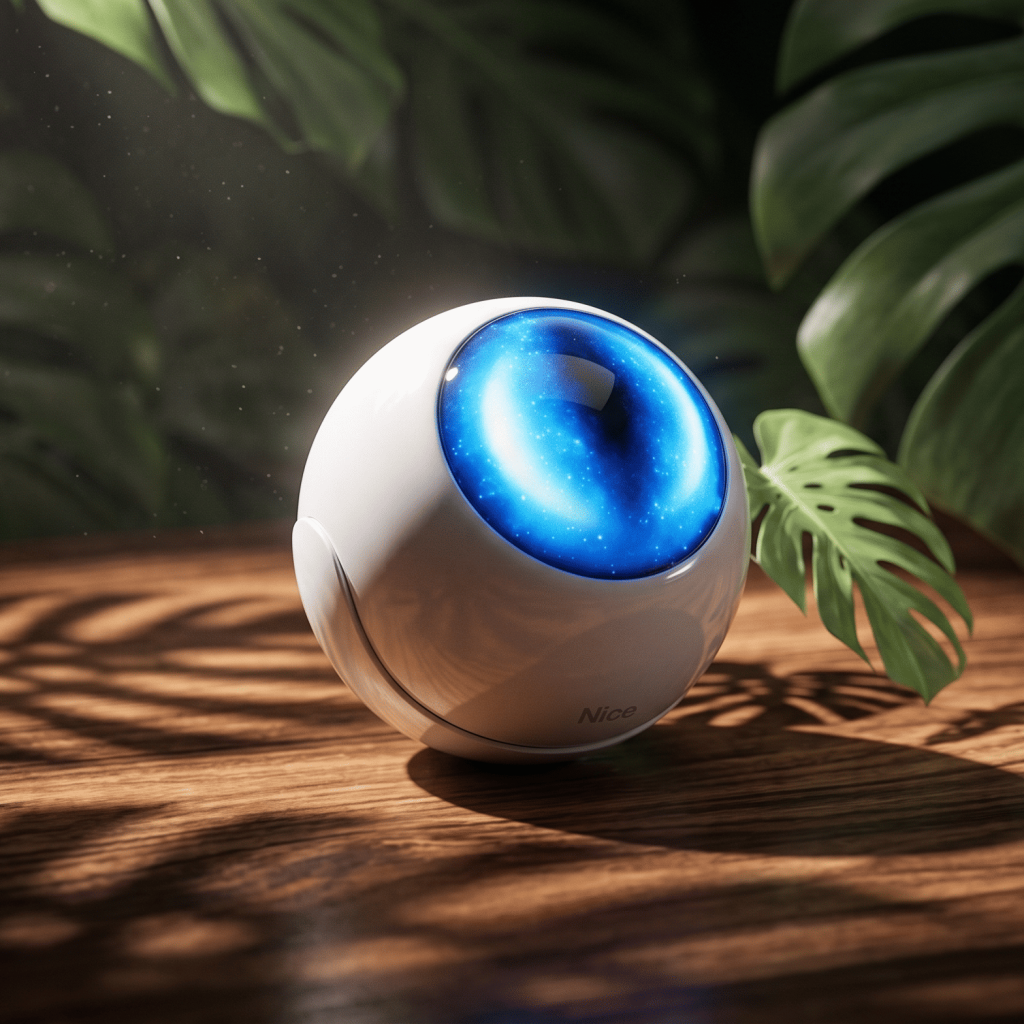
The true triumph of design is to go unnoticed. Forget the bulky detectors that ruin your interiors. Today’s smart sensors draw inspiration from nature and modern architecture. Whether it’s motion detectors with organic designs (reminiscent of a feline’s eye), invisible opening sensors blended into your exotic wood joinery, or discreet flood probes, these technological gems keep watch. At the slightest unexpected event, an elegant, silent notification reaches you, wherever you are in the world.

2. The Light Choreography: Simulating Life

The best security isn’t repressive — it’s preventive. While conventional systems switch everything off, your smart home keeps living. Thanks to lighting automation, your villa orchestrates a true choreography in your absence: the dimmed living room lights come on at dusk, the outdoor lighting highlights the poolside palm trees at nightfall, and they switch off at random to simulate a natural human presence. No longer a simple timer, it’s your home’s soul continuing to express itself, deterring any intrusion while preserving a perfect nighttime aesthetic.

3. Sovereign Access: Smart Locks & Biometrics

Managing the physical keys of a Caribbean villa — with the house staff, the pool technician, or the property manager — is a constraint of the past. High-end smart locks fuse noble materials (brushed steel, matte black resistant to sea spray) with cutting-edge technology. Grant temporary access via ephemeral PIN codes or control the opening remotely from your smartphone. You keep total control over who enters your sanctuary, while offering a seamless, friction-free experience to your trusted collaborators.

4. The Aesthetic Eye: Subtle Monitoring

Video monitoring shouldn’t turn your tropical paradise into a penitentiary fortress. New-generation smart cameras blend stealthily into cornices or the landscaping. Equipped with artificial intelligence capable of distinguishing an animal from an intruder, they give you a live video feed of crystal-clear purity. You can glance at your deck or the marina, simply for the pleasure of seeing your home again, with the certainty that everything is in order.

Conclusion Technology should never compromise the beauty of your spaces. At Nice, we believe your villa’s security should be as exclusive and refined as its architecture. Travel light of heart; your smart home watches over everything, in style.